IBS Medication
Have you been prescribed medication for IBS by your doctor? You’re not alone. It’s still common for doctors to routinely prescribe medication for IBS. The question is, does it help? The answer is both yes and no, but mostly no.
High Placebo Effect with IBS Medication
It’s common to feel some initial relief, but this often fades after a few weeks. This is due to the placebo effect, which is particularly strong when it comes to gastrointestinal treatments—people really want to feel better. However, this makes it hard to evaluate the actual effectiveness of these medications, and the risk is that you end up back at square one, trying something new. We often meet people who have tried medication after medication without any significant improvement. If your prescribed medication isn’t working, speak with your doctor.
Common IBS Medications
The most common medications for IBS include:
- Bulking agents – e.g., Inolaxol, which improves stool volume and consistency, whether you have diarrhea or constipation.
- Omeprazole – Mainly alleviates symptoms in the upper digestive tract, such as heartburn.
- Laxatives – Constella, Resolor.
- Anti-diarrheal agents – Dimor, Loperamide.
- Pain relief and antispasmodics – Egazil or Papaverine.
- Antidepressants – e.g., Sertraline, Citalopram.
Take control of your IBS today!
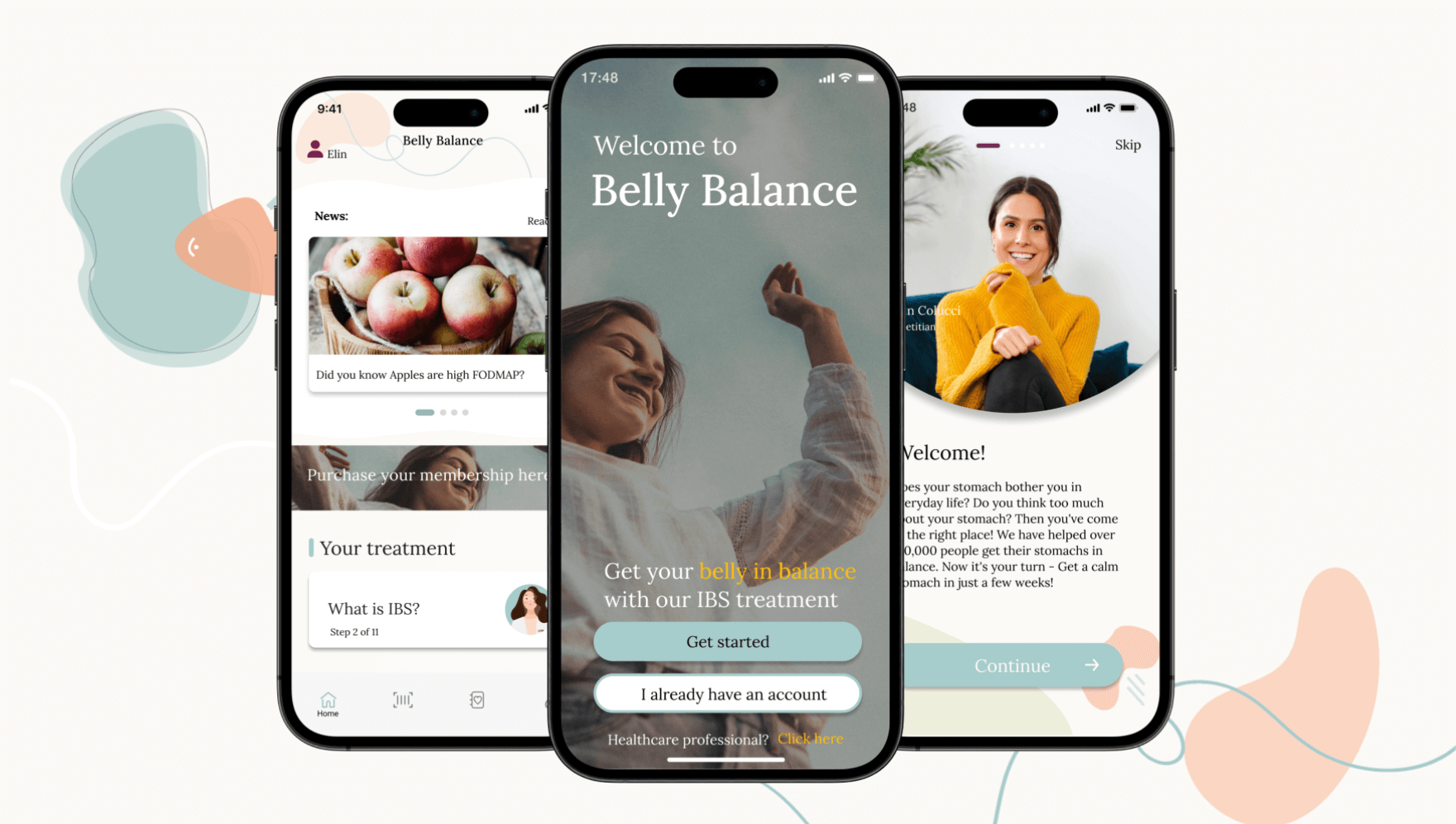
Ready to reclaim your life from IBS? Our app provides the tools and guidance you need to manage IBS effectively.
Download the AppCommon Over-the-Counter IBS Products
There’s a wide range of products available at pharmacies and health stores. The most common include:
- HUSK – A bulking agent made from psyllium husk (Ispaghula).
- Visiblin – Another psyllium husk-based bulking agent.
- Sunwic – Guar fiber containing galactose and mannose.
- Imogaze – Contains dimethicone.
- Nogasin – Contains digestive enzymes.
- Dimethicone – Helps reduce gas by lowering surface tension.
- Iberogast – An herbal preparation that can be added to food.
- ProIBS – A powder containing inulin, fructose, and Aloe vera.
However, despite the claims from pharmacies that all gut-related problems can be solved with these products, very few people experience significant improvements. Many of these products lack proper studies specifically on IBS, and there’s a risk of getting stuck in a long and costly cycle of trying pills, powders, and drops, without your digestive issues improving. Additionally, many medications cause unwanted side effects and can even worsen IBS symptoms.
Consider Dietary Changes Instead
If you’re seeing results from your medication or product, congratulations! You can continue using it. But if it’s not effective or if you’d prefer to live without unnecessary pills, we suggest making dietary changes instead. The FODMAP diet has been shown to help 75% of people with IBS or sensitive stomachs. It’s in everyone’s best interest to start with dietary adjustments rather than relying on IBS medication.
Download the Belly Balance app and take control of your gut health today!
By: Sofia Antonsson
Licensed Dietitian, Belly Balance
Read more about

IBS - What is it?
Bloated , constipated or having a gassy stomach? IBS or Irritable Bowel Syndrome is a functional gastrointestinal disorder, meaning no physical issues can be found in the stomach or intestines; they just don’t function quite as they should.

How the app works
Download the app and become part of our community. We assist you in achieving a calm and happy stomach through treatment and tools available directly in the app.

About FODMAP
By learning which foods upset your stomach, you can make conscious choices and get quick symptom relief. With the low FODMAP diet, you receive structured assistance in understanding which foods your body tolerates better than others. No more guessing and pondering – you get the answer straight away!