Sofia Antonsson, registered dietitian and founder of Belly Balance
A sluggish gut the week before your period and loose stools when it arrives. If that sounds familiar, you are in good company.
Many women notice that their gut is not the same all month. It is not in your head. Hormones affect the gut more than you might think.
Hormones set the pace
After ovulation, progesterone rises. This makes the gut work a little more slowly, which is why many women feel sluggish and bloated in the week before their period.
When your period starts, hormone levels drop quickly. The body then produces prostaglandins, substances that make the womb contract. They also affect the gut and can make it loose and crampy. About a third of all women notice changes like these around their period, and with IBS they are often more noticeable.
We always ask about the menstrual cycle when we see women with gut symptoms. It often explains why the same food works one week but not the next. Understanding the link is usually a relief. Your gut is not doing anything wrong, it is just following your hormones.
Spot the pattern
Note when your period starts, how your gut feels and what you have eaten, and do it for two to three months. A pattern often appears quite soon.
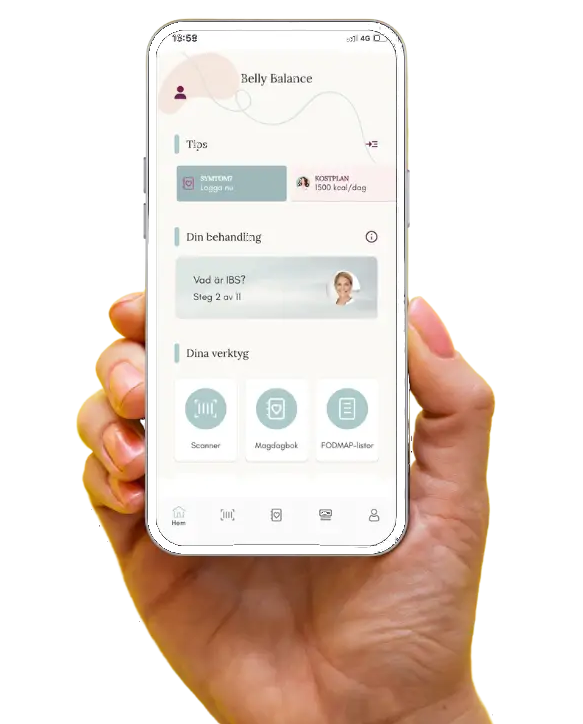
There are apps for both your cycle and gut symptoms, but pen and paper work just as well. What matters is doing it regularly. The gut diary in the app works well for this. Then you can stop looking for problems in your food that are not there.
Note sleep and stress too. Sometimes it is the combination that matters, such as a stressful week that coincides with the days before your period.
Plan for the tougher days
Knowing what to expect makes it easier. Many women feel better being a little more careful with onion, garlic, pulses and other high FODMAP foods in the days before and during their period, even if they tolerate more the rest of the month.
Warmth on your tummy and a gentle walk help many with cramps. Sleep and stress matter too, as both make the gut more sensitive. And allow yourself to take those days a little easier.
The pattern differs between types of IBS. Women who mainly have constipation often notice more symptoms in the second half of the cycle, while those with loose stools more often have a harder time during the period itself.
ⓘ If you have a lot of pain, heavy bleeding or gut symptoms that keep getting worse around your period, contact your GP.
In the gut diary you can follow your gut day by day and see the pattern over the month. The app also has more than 600 gut-friendly recipes for the tougher days.