Sofia Antonsson, registered dietitian and founder of Belly Balance
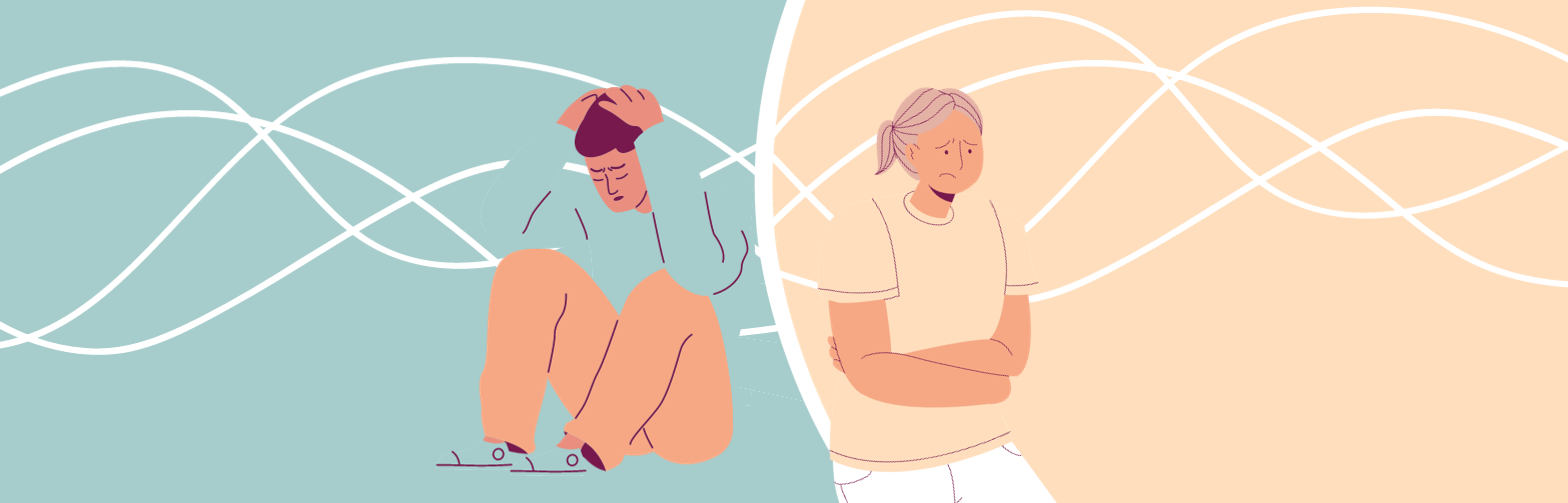
Most of us know the butterflies before a presentation. If you have IBS, the link between stress and your gut can be much stronger.
The gut has its own nervous system with hundreds of millions of nerve cells. It is connected to the brain, and signals travel both ways. The brain affects how the gut moves and how sensitive it is, and the gut sends signals back.
IBS is now described as a disorder of gut-brain interaction. That does not mean the symptoms are in your head. It means the gut and the brain are connected.
Stress shows in the gut
Under stress the gut changes pace. In some people it speeds up, in others it slows down. The gut also becomes more sensitive, and tummy pain in turn causes worry. It easily becomes a vicious circle.
We often see that the same lunch is fine on holiday but not on a hectic workday. The food is the same, but the body is in a different mode.
It is not only about major pressures. Time pressure, poor sleep and lunch on the go also affect the gut, even when you do not feel stressed.
Small things make a difference
An easy way to start is to breathe calmly for a few minutes before you eat. Long out-breaths help the body switch over to digestion. Sit down when you eat, and avoid eating in front of the computer if you can.
Peppermint tea after a meal is, for many, a calm way to finish. Peppermint relaxes the muscles of the gut, and the moment itself helps too.
Regular meals, sleep and daily movement give your gut better conditions. It does not have to be exercise; a walk goes a long way.
There are also treatments that target the gut-brain connection, such as gut-focused CBT and gut-directed hypnotherapy. They have good research support.
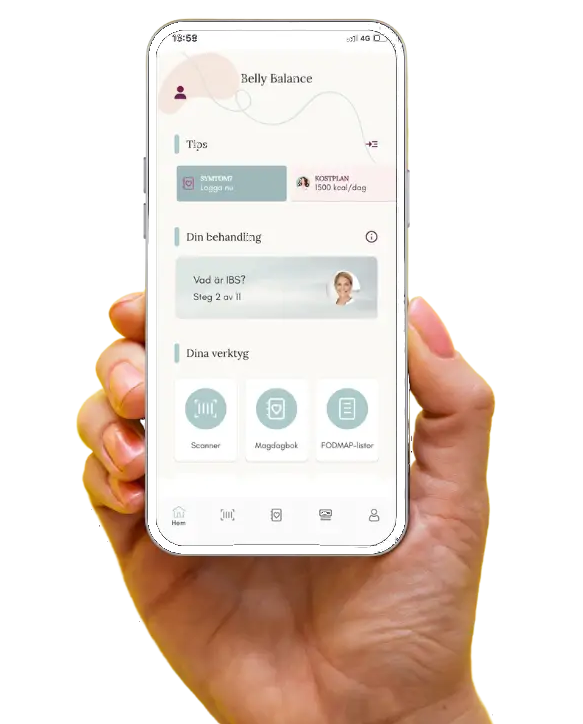
The app includes tapping exercises, a simple technique where you tap lightly with your fingertips on different points on the body while breathing calmly. Many people find it helps them unwind, and you can do it anywhere.
Many people find it helps to build small breaks into the day. Five minutes outdoors, a cup of tea in peace or putting your phone away at lunch.
Food calms things too
It is hard to relax if you do not know what your gut will do after a meal. Once you know what you tolerate, the worry eases, and that in itself calms the gut. That is why at Belly Balance we always work with both diet and the gut-brain axis. Diet matters, but it does not always take you all the way. When you work on both, the improvement is usually greatest.
Try tapping and the other stress exercises in the app. The 11-step programme covers both diet and the connection between gut and brain.